Private equity investment in sub-specialties of dentistry such as oral & maxillofacial surgery, endodontics, etc. have received investment from private equity sponsors for the first time within the past 5-10 years, while DSO’s have been around now for over two decades, dating back to the 1990’s.
With over 50 active DSOs in the market today in 2024, general dentistry has garnered market leading interest amongst healthcare investors.
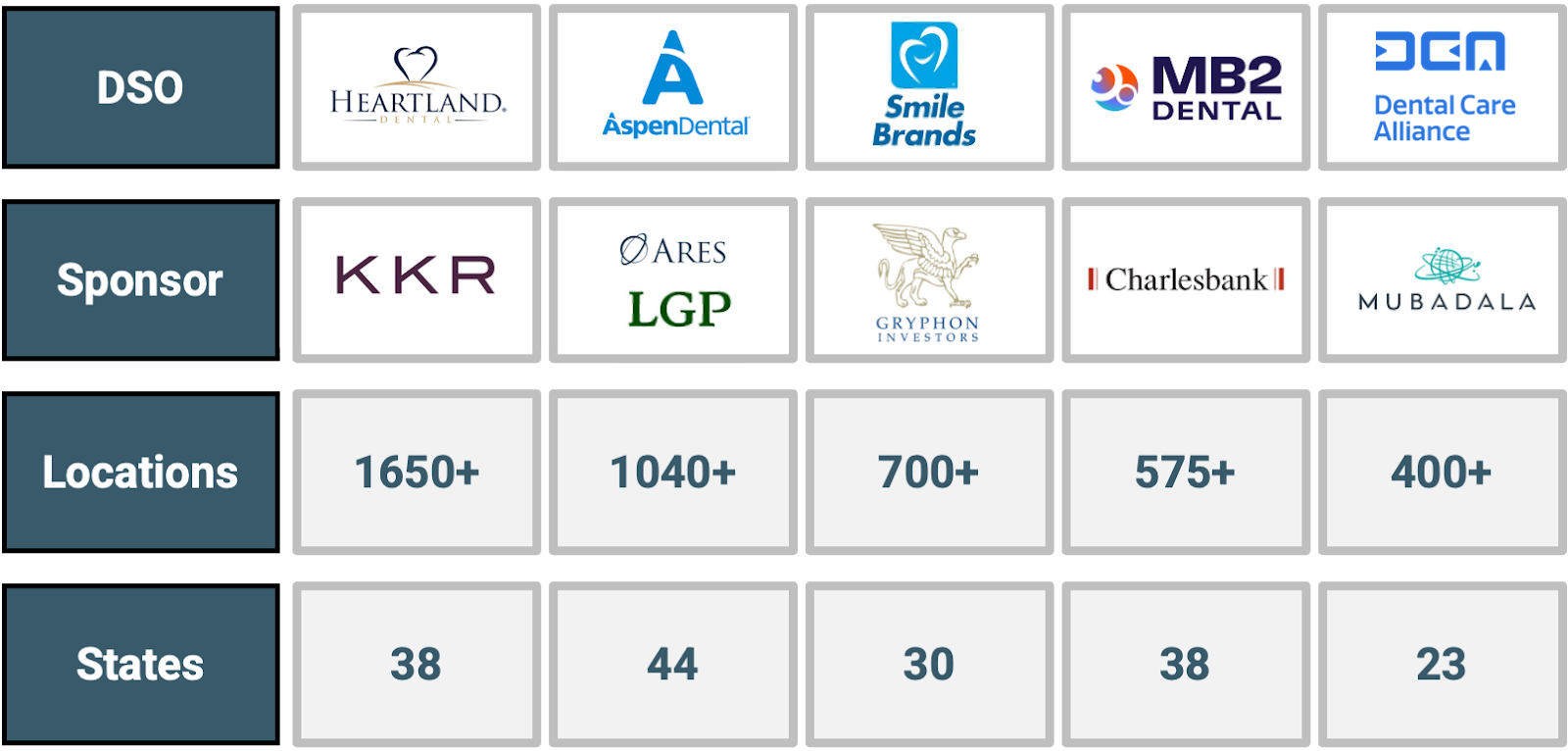
Leading DSO Platforms
As illustrated above, the DSO market has some extremely large players, many with affiliated practices in over half of the United States, and two of which have already experienced a “3rd bite” transaction.
DSO’s have recently expanded their service offering and began to acquire subspecialty dental services including oral surgery, endodontics, pediatric dentistry and periodontics. On the flip side, specialty dental focused platforms have started acquiring general and pediatric dentistry practices, an investment convergence in overall oral health. One example of the latter is the rebrand of US Endo Partners, an endodontics focused platform, to Specialized Dental Partners (“SDP”) in September 2023. The updated brand name represents a platform that will be acquisitive across all of oral health, not just endodontics.
In 2023, the industry saw an unprecedented level of activity as a whole, with DSO’s continuing to tuck in small practices, with MB2 Dental being the most active acquirer on the general dentistry side. Despite this surge, the market remains highly fragmented compared to other physician sub-sectors within healthcare. Over the past three years, three major “2nd bite” transactions have occurred in dentistry, as illustrated below:
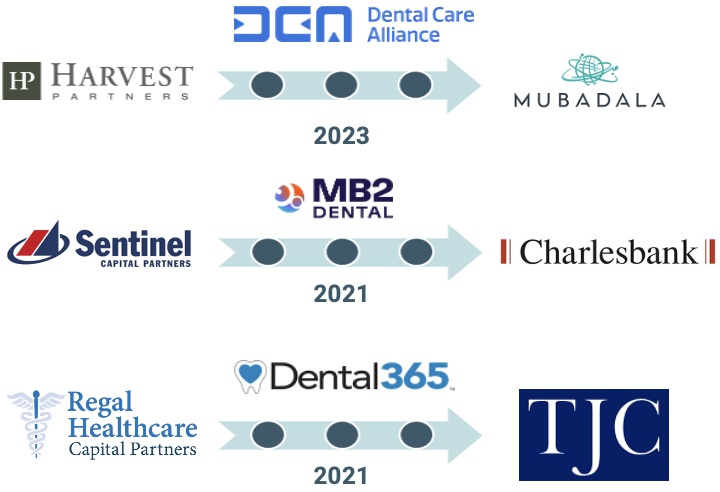
*Initial Platform Investments Only – Does Not Include Acquisitions in Adjacent Markets*
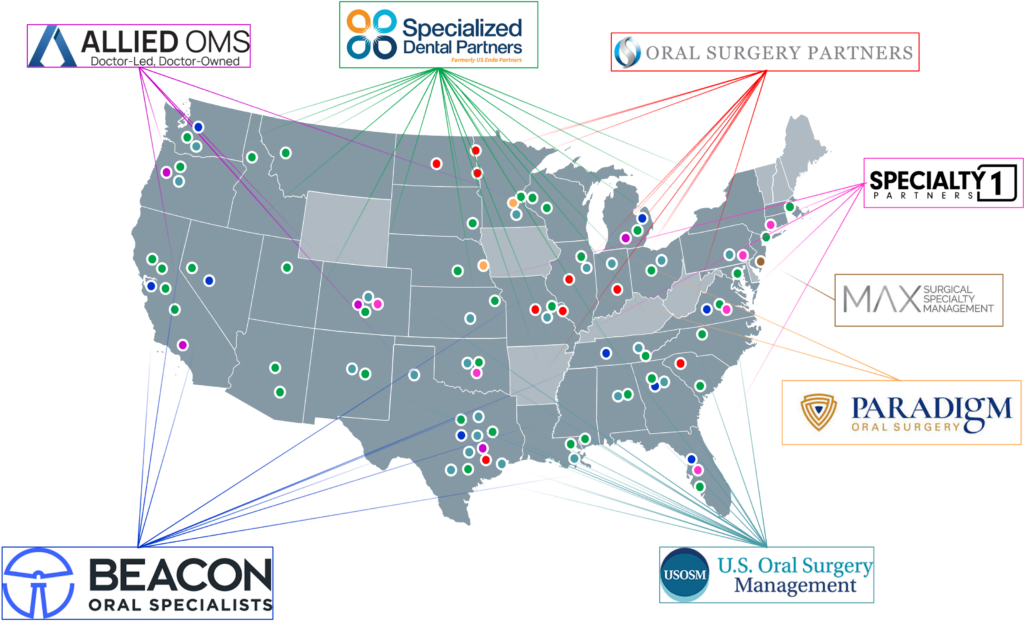
Given broader economic forces stabilizing, PGP anticipates a number of the established oral surgery platforms to pursue and ultimately consummate “2nd bite” transactions later in 2024 and into 2025. These successful exits will present stout case studies of the success private equity can have with dentists and oral surgeons. Early movers and entrepreneurs who partnered with DSOs years ago will be well positioned to achieve substantial gains as liquidity events approach. This only reinforces the case for continued investment in the space, as more and more dentists and oral & maxillofacial surgeons alike have gotten comfortable with partnering with private equity.The last twelve months have seen existing OMS platforms invest heavily into new markets and new partners with 30 add-on transactions. Given the convergence of traditional and specialty dentistry, the market continues to show room for new entrants, as multiple new platforms have been founded in the last 12 months inclusive of Mountain State Oral & Facial Surgery (represented by Physician Growth Partners) in their partnership with HealthEdge Investment Partners. As new platforms enter the market, PGP expects a continued surge in add-on level transactions across the country, and that bodes well for oral surgery practice owners from a practice valuation perspective.
When evaluating a potential partner, it is extremely important to find the right fit to ensure a strong go-forward partnership. PGP advises that four critical factors need to be considered when evaluating whether a partner is right for your practice
While many independent groups may initially feel they can navigate a transaction without an advisor, those that have gone through the process with an experienced and reputable firm in their corner will be quick to highlight the significant value add from both economic, partnership and educational perspectives. Ensuring that each shareholder is prepared and fully understands the dynamics within a transaction is crucial for the future success of the business.
A seasoned healthcare transaction advisory team can ensure that the most attractive outcome is achieved. Through a formalized competitive marketing process, an advisor can ensure the practice maximizes their economics and transaction terms. A transaction process also allows the practice to interview multiple private equity partners and choose the group that presents the best ‘fit’.
Even if a group is approached by a buyer or has a buyer in mind, it is essential to run a process considering the practice has one opportunity to choose the right private equity partner, supplemented by the value a process drives regarding both deal terms and economics.
One of the biggest questions practice owners have is what happens after the transaction is consummated? In reality, if you are doing a transaction with a reputable private equity platform, physicians will largely continue to operate “business as usual”. The private equity partner will look to implement certain growth initiatives, but these initiatives will all be items that were discussed at great length in advance of consummating the transaction. On the clinical front, physicians will practice medicine the way they always have. Clinical autonomy is maintained, and an advisory firm like PGP negotiates this on the physician group’s behalf. As for infrastructure capabilities, groups that lack back-office sophistication will typically integrate into the “platform” practices EMR, Accounting and PM systems. Outside of day-to-day operations and clinical delivery, the most notable change is the holding of rollover equity in the new partnership by selling physicians. Due to the fact a substantial liquidity event is experienced, shareholders are required to utilize a percentage of their proceeds in the form of equity in the new enterprise. This is desired by the private equity firms as they want to maintain alignment with the physicians that they have invested in, creating a shared goal of a “second bite of the apple” when the platform ultimately experiences a subsequent sale 3–7 years down the road.

Gaining Payer
Leverage

Capturing In-House
Ancillary Services

Centralizing Infrastructure
and Operations

Resulting In

Sustaining Organic Growth
The consolidation within oral surgery and specialty dentristy continues to accelerate into the second half of 2024 and PGP expects the pace to continue into 2025. Whether a practice outwardly desires private equity partnership, questions the rationale and effectiveness of a PE partner, or downright disagrees with private equity, it is essential to get educated and ensure your practice is positioned for continued success in your market.
For those that choose to go down the path, it is imperative that culture and alignment, not simply economics, is the first goal. The role of an advisor like PGP can be the difference maker not only in knowing who can be trusted and who has a track record of success, but in ensuring an economic outcome that is satisfactory when transferring the ownership of your business.
If interested in pursuing a transaction, learning about private equity, the private equity strategy, transaction dynamics, or activity in your market, please utilize the information below to contact the PGP team and schedule a discussion.